
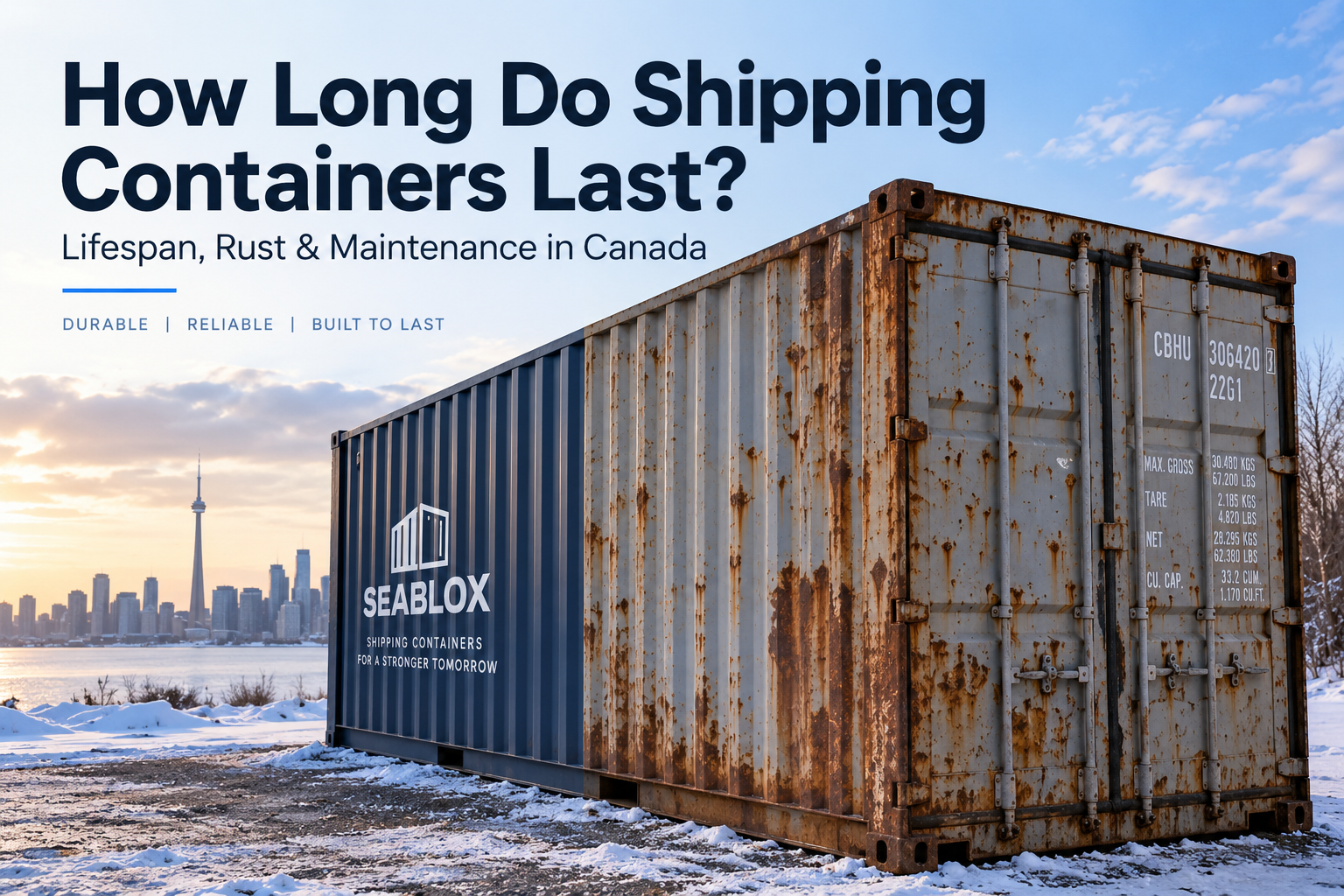
Shipping containers are built to survive some of the harshest conditions in transportation. During their working lives, they are exposed to salt air, rain, snow, impacts, heavy loads and repeated handling at ports around the world.
That durability is one of the reasons shipping containers have become so popular for storage, construction sites, workshops, offices and custom structures across Canada.
But how long do shipping containers actually last?
There is no single expiry date. A well-maintained shipping container used for stationary storage can remain useful for decades, while a neglected container sitting directly on wet ground may develop significant corrosion much sooner.
The condition of the container when purchased, its previous use, drainage, location, maintenance and exposure to moisture and road salt all affect its lifespan.
In this guide, we explain the typical shipping container lifespan, why containers rust, which types of rust matter, and how Canadian owners can extend the life of their container.
How Long Does a Shipping Container Last?
For stationary storage or building applications, it is reasonable to expect a quality shipping container to provide many years of useful service, and containers that are properly positioned and maintained can remain functional for 20 years or longer.
However, age by itself does not tell you whether a container is still in good condition.
A 15-year-old container that has been maintained, kept off wet ground and repaired when necessary may be in considerably better condition than a much newer container that has been exposed to standing water, salt or poor drainage.
International shipping regulations also do not simply retire containers once they reach a specific age. The International Maritime Organization’s Convention for Safe Containers focuses on the inspection, maintenance and structural safety of containers rather than establishing one universal maximum lifespan. International Maritime Organization — Convention for Safe Containers
In Canada, the Safe Containers Convention Regulations similarly require applicable containers to be maintained in safe condition and examined according to the Convention’s requirements. Government of Canada — Safe Containers Convention Regulations
For a container being purchased for storage or modification, therefore, condition is often more important than the manufacturing date alone.
One-Trip vs Used Shipping Container Lifespan
The amount of usable life remaining in a container depends heavily on what condition it is in when you purchase it.
| Container type | Typical condition | Lifespan potential for stationary use |
|---|---|---|
| One-trip container | Near-new with minimal wear | Often 20+ years with good care |
| Cargo-worthy used container | Structurally sound but previously used in shipping | Many additional years depending on condition |
| Wind and watertight used container | More cosmetic wear and possible repaired areas | Highly dependent on existing corrosion and maintenance |
| Heavily corroded container | Significant rust or structural deterioration | May require substantial repairs |
A one-trip shipping container has normally carried cargo only once before being sold. Because it has experienced very little shipping service, it generally provides the longest remaining lifespan and the cleanest appearance.
You can learn more about the differences and advantages in Seablox’s guide to one-trip shipping containers.
Used containers offer excellent value as well. Surface scratches, faded paint, dents and light surface rust are normal on containers that have spent years in commercial service.
For buyers who prioritize price over appearance, a properly inspected 20-foot used shipping container can still provide years of reliable storage.
Why Don’t Shipping Containers Rust Away Quickly?
Most modern steel cargo containers are designed with corrosion resistance in mind. Weathering steels are widely used in transport equipment and shipping containers because they resist atmospheric corrosion better than ordinary carbon steel.
Weathering steel is often referred to by the well-known COR-TEN or Corten steel name.
Unlike ordinary carbon steel, weathering steel is designed to develop a dense oxide layer when exposed to alternating wet and dry conditions. This layer slows further corrosion.
Steel manufacturer SSAB explains that weathering steel forms a protective patina that acts as a barrier between the steel and the surrounding atmosphere. SSAB’s explanation of weathering steel and COR-TEN
That does not mean a shipping container cannot rust.
The steel is corrosion resistant, not corrosion proof. Persistent moisture, trapped water, salt, coating damage and poor drainage can eventually overcome that protection.
Is Rust on a Shipping Container Normal?
Yes. Some rust on a used shipping container is completely normal.
In fact, it would be unusual for an older cargo container to have no scratches or surface oxidation at all. Containers are lifted, stacked, transported, loaded and unloaded repeatedly during commercial service.
The important distinction is between surface rust and structural corrosion.
Light orange or brown oxidation around scratches, edges and worn paint is normally cosmetic. It can usually be cleaned, treated and repainted relatively easily.
More serious corrosion occurs when rust begins removing enough steel that the panel becomes thin, flakes heavily, develops deep pitting or eventually forms holes.
Particular attention should be paid to the lower side rails, bottom cross-members, door frames, roof edges and areas that remain wet for extended periods.
What Causes Shipping Containers to Rust Faster?
Water is the biggest enemy of any steel container.
A shipping container that gets wet and then dries normally handles weather very well. Problems develop when moisture becomes trapped against the steel and cannot evaporate.
One of the most common causes is placing a container directly on soil or grass. The soil underneath can stay damp for long periods while vegetation traps additional moisture against the bottom rails.
Standing water around the container creates a similar problem.
This is particularly important in Ontario, where containers are exposed to snow, freeze-thaw cycles, rain and road salt. Containers located beside salted roads, parking lots or industrial yards may experience more aggressive corrosion than containers in cleaner environments.
SSAB specifically notes that weathering steel performs best where water can drain freely and warns that prolonged moisture, direct contact with soil and de-icing salts can negatively affect its corrosion performance. SSAB COR-TEN design and weathering guidance
This is why site preparation can have such a large effect on shipping container lifespan.
Keep the Container Off Wet Ground
One of the best things you can do for a shipping container is give it a properly drained base.
A compacted gravel pad is an excellent option for many storage containers because water can drain away instead of remaining underneath the unit.
Concrete pads, concrete footings and engineered piers can also work well depending on the application.
The important point is that the container should remain level, supported and out of standing water.
Seablox has a detailed guide comparing shipping container base options including gravel, concrete, pavers and piles.
Proper drainage does more than prevent corrosion. It also helps prevent settlement and twisting, which can make cargo doors difficult to open and close.
Inspect the Roof Regularly
Container roofs are strong, but they are not designed to hold permanent pools of water.
A dented roof can create a low point where rainwater or melting snow collects. Over time, that area can become more susceptible to corrosion.
Leaves, dirt and other debris can make the problem worse by trapping moisture.
Check the roof periodically and remove debris. If a dent creates significant water pooling, repairing the low area before corrosion develops can extend the life of the container.
This is particularly important for containers placed near trees or buildings where leaves and snow may accumulate.
Repair Scratches and Damaged Paint
Paint is one of the container’s first lines of defence against moisture.
Shipping containers naturally collect scratches during transportation and handling. Small scratches are usually not a major concern, especially on weathering steel, but larger damaged areas should be addressed before corrosion spreads.
A typical repair involves removing loose rust and failed paint, cleaning the area and applying an appropriate primer and exterior coating.
For containers being permanently installed or incorporated into a commercial project, repainting the entire exterior can provide both improved appearance and an additional layer of corrosion protection.
Pay Attention to the Bottom of the Container
Owners naturally inspect the walls and roof because they are easy to see, but corrosion underneath a shipping container can be more important.
The bottom structure includes steel rails and cross-members that support the container floor.
If the unit sits directly on soil, weeds or continually damp material, these components can remain wet much longer than the visible exterior walls.
Whenever possible, leave enough clearance and drainage around the container so air can circulate underneath it.
This is another reason a properly prepared gravel or concrete base is worth considering for long-term installations.
Maintain the Cargo Doors
The steel shell is only part of a container’s durability.
Cargo doors include hinges, locking rods, handles and rubber seals that also require occasional maintenance.
Door hinges and locking mechanisms should move freely. Lubricating moving components periodically can prevent corrosion and make heavy cargo doors considerably easier to operate.
Door seals should also be inspected for damage. A torn or deteriorated gasket can allow water into the container even when the container itself has no leaks.
If doors suddenly become difficult to operate, check that the container has not settled or twisted before assuming the doors themselves are damaged.
Control Moisture Inside the Container
Rust does not always begin on the outside.
Condensation can develop inside an uninsulated steel shipping container when warm, moisture-containing air contacts cold steel surfaces. Under the right conditions, droplets can form on the ceiling and walls.
Repeated condensation can damage stored goods and contribute to interior corrosion over time.
Ventilation, insulation, moisture control and proper storage practices can significantly reduce this problem.
For containers being converted into offices, workshops or other occupied spaces, professional insulation and HVAC systems can also help control both temperature and humidity.
Seablox builds fully customized shipping container offices for year-round use in Ontario with options including insulation, heating, cooling, electrical systems, doors and windows.
Shipping Container Maintenance Checklist
A shipping container does not require complicated maintenance, but a quick inspection once or twice a year can prevent small issues from becoming expensive repairs.
Check the following areas:
- roof for standing water, debris or deep dents; exterior panels for damaged paint, deep rust or holes; bottom rails and visible cross-members for corrosion; door seals for cracks or gaps; hinges and locking rods for smooth operation; the ground around the container for standing water; the base for settlement or uneven support; interior walls and ceiling for condensation, leaks or rust; and modified openings such as doors, windows, vents and HVAC penetrations for failed sealant.
For containers used in harsh industrial environments or locations exposed to significant road salt, inspections should be performed more frequently.
When Is Shipping Container Rust Too Severe?
Cosmetic rust is not necessarily a reason to reject a used container.
More concern is warranted when corrosion has significantly reduced the thickness of structural components or created holes through the steel.
Deep corrosion around the corner posts, corner castings, bottom rails or structural frame should be evaluated carefully. These components play a much greater structural role than the thin corrugated side panels.
Containers intended for international shipping have additional requirements. Under Canada’s Safe Containers Convention framework, owners of applicable containers are responsible for maintaining containers in safe condition, and containers presenting an obvious safety risk may be detained. Government of Canada — Safe Containers Convention Act
A container being purchased strictly for stationary storage may have different requirements, but structural corrosion should still be taken seriously.
Is a One-Trip Container Worth It for Long-Term Storage?
If you plan to keep a container for many years, a one-trip unit can be an excellent choice.
The main advantage is not simply appearance. You are starting with a container that has experienced very little previous use, meaning less corrosion, fewer repairs and less accumulated structural wear.
For permanent installations, custom modifications, offices, workshops and customer-facing applications, the additional upfront cost can make sense because the container provides the greatest remaining service life.
For general equipment or construction storage where appearance is less important, a good used wind-and-watertight container may provide better value.
You can compare current new, one-trip, specialty and used shipping containers available from Seablox.
How to Make a Shipping Container Last Longer
The formula for long container life is surprisingly simple: keep water away from the steel whenever possible and repair problems before they become serious.
Start with a quality container. Place it on a stable, well-drained base. Prevent water from pooling underneath or on the roof. Inspect damaged coatings and rust periodically. Maintain the doors and seals. Control interior condensation. Keep soil, vegetation and de-icing salt from remaining against the steel.
Those relatively simple measures can add years to the useful life of a shipping container.
Final Thoughts: How Long Will Your Shipping Container Last?
Shipping containers are designed for repeated heavy use and harsh outdoor environments. When they are retired from international cargo service, many still have substantial useful life remaining for storage, construction and modification projects.
There is no exact number of years that applies to every container.
A lightly used one-trip container stored on a properly prepared site may remain in excellent condition for decades, while a neglected unit sitting in constant moisture may deteriorate much faster.
For Canadian conditions, drainage, rust prevention, coating maintenance and moisture control are the biggest factors you can control.
If you are considering a container for storage, construction, an office, workshop or custom project, Seablox supplies new and used shipping containers throughout Ontario along with delivery and in-house modifications.
View our shipping containers and accessories online or contact Seablox to discuss the right container for your application.