
Choosing the right shipping container base is one of the most important steps before placing a container on your property. A shipping container is built from heavy-duty steel, but it still needs a stable, level, and well-drained surface. Poor ground preparation can lead to sinking, twisting, door alignment problems, water pooling, rust, and long-term maintenance issues.
Whether you are using a container for storage, a workshop, a site office, equipment storage, or a custom modification project, proper shipping container ground preparation will help protect your investment and keep the container functional for years.
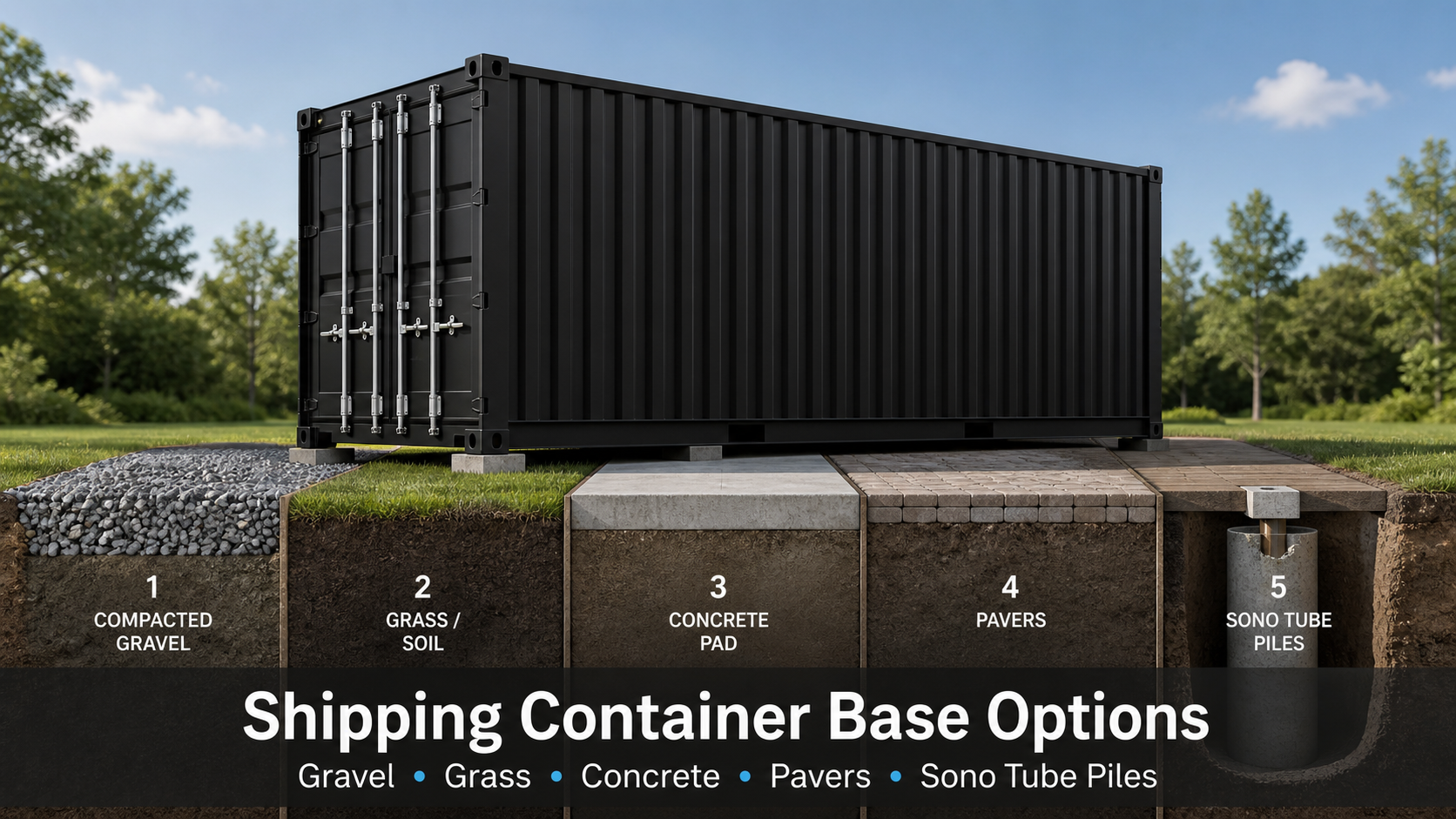
In this guide, we compare the most common shipping container foundation and base options, including gravel, grass, concrete pads, pavers, and sono tube piles.
Why the Shipping Container Base Matters
A shipping container does not always need a full foundation like a traditional building, but it does need solid support. Containers are designed to carry weight through the corner castings and bottom frame. If the ground below the container is uneven or soft, one corner can sink and cause the container to twist.
A proper shipping container base should:
Keep the container level, support the container evenly, allow water to drain away, reduce corrosion under the container, prevent sinking, and keep the cargo doors operating properly.
One of the first signs of poor site preparation is hard-to-open cargo doors. If a container twists because one corner has settled, the doors may bind or become difficult to close. For modified containers with man doors, windows, insulation, electrical, HVAC, or interior finishes, proper leveling becomes even more important.
1. Gravel Base for Shipping Containers
A shipping container gravel pad is one of the best all-around options for most container placements. It is cost-effective, practical, and works well for both temporary and long-term use.
Gravel provides excellent drainage, which helps prevent water from sitting underneath the container. This is important because trapped moisture can increase corrosion on the underside of the container and create muddy conditions around the unit.
A gravel base is also easier to adjust than concrete. If the container settles slightly over time, the stone can usually be regraded or topped up.
Benefits of a Shipping Container Gravel Pad
A gravel pad drains well, reduces mud, helps prevent sinking, is more affordable than concrete, and can be installed quickly. It is also a good option if the container may need to be moved in the future.
For many storage containers, rental containers, container offices, and modified containers, gravel is the best balance between cost and performance.
Recommended Gravel Base Setup
A good shipping container gravel base usually starts with removing topsoil and organic material. The area should then be covered with geotextile fabric and filled with compacted granular material.
A common setup is:
Remove soft soil and grass, install geotextile fabric, add 6″ to 12″ of compacted crushed stone, and finish with a level gravel surface.
For heavier use, such as forklift access or frequent loading, a thicker base may be needed. The pad should also extend beyond the container footprint, usually at least 1′ to 2′ wider on all sides, to improve drainage and access.
Best Uses for Gravel
A gravel base is ideal for storage containers, construction site containers, rental containers, workshops, container offices, equipment storage, and general yard placement.
2. Placing a Shipping Container on Grass or Bare Ground
Placing a shipping container on grass is the cheapest option, but it is usually not recommended for long-term use. Grass and soil hold moisture, soften after rain, and move during freeze-thaw cycles.
For very short-term storage, grass may be acceptable if the ground is firm, level, and dry. However, for long-term container placement, grass can lead to problems.
Problems with Placing a Shipping Container on Grass
Grass and soil can hold moisture against the bottom of the container. This can increase rust risk and reduce airflow underneath the unit. The container may also settle unevenly, especially after heavy rain or snowmelt.
If one corner sinks, the container can rack or twist. This often causes the cargo doors to become difficult to open or close.
When Grass May Be Acceptable
Grass may work for temporary container placement, short construction projects, rural properties with firm ground, or light-duty storage. Even then, it is better to place concrete blocks, pavers, timber mats, or compacted gravel under the corners.
For anything long-term, a gravel pad or concrete base is a much better option.
3. Concrete Pad for Shipping Containers
A concrete pad for a shipping container is one of the strongest and cleanest base options. It is ideal for permanent installations, commercial sites, and high-value container modifications.
Concrete provides a stable, level surface and creates a clean area around the container. It also reduces weeds, mud, dust, and maintenance.
Benefits of a Shipping Container Concrete Pad
Concrete is durable, clean, professional-looking, and excellent for long-term use. It is especially useful when the container will be accessed regularly by staff, customers, equipment, or service vehicles.
A concrete pad is a strong option for container offices, workshops, washroom containers, retail units, electrical rooms, generator enclosures, and other modified containers.
Full Concrete Pad vs Concrete Footings
A full concrete pad supports the entire container area and gives the cleanest finished appearance. However, it is usually the most expensive option.
Concrete strip footings or concrete pads under the corners can be a more cost-effective alternative. Since shipping containers carry most of their weight through the corners, properly placed concrete supports can work well when designed correctly.
Drainage for Concrete Pads
A concrete pad should not trap water under the container. The slab should have a slight slope so water drains away from the container. If water sits along the bottom rails, it can still contribute to corrosion over time.
Best Uses for Concrete
Concrete is best for permanent container offices, commercial container projects, modified containers, washroom containers, workshops, retail units, and high-traffic sites.
4. Pavers or Patio Stones for Shipping Containers
Pavers, patio stones, and concrete blocks can be used as support points for a container. This is a simple option for people who want something better than grass but do not want to pour a full concrete pad.
A shipping container paver base can work well for light-duty storage, especially when the pavers are installed over compacted gravel.
Benefits of Pavers
Pavers are affordable, easy to find, and easy to adjust. If one paver settles, it can often be lifted, re-leveled, and reset.
They are also useful for temporary container placement where the container may need to be moved later.
How to Use Pavers Under a Shipping Container
Pavers should not be placed directly on soft grass. For best results, excavate the area under each paver, add compacted gravel or screenings, and level the pavers before placing the container.
Pavers should be located under the corner castings or main structural points. For a 40′ container, extra support points along the length may help, especially if the container will hold heavy material.
Best Uses for Pavers
Pavers are best for residential storage containers, temporary container placement, light-duty use, and budget-friendly leveling pads.
For heavy storage, forklift loading, or modified containers, a full gravel pad or concrete base is usually a better choice.
5. Sono Tube Piles for Shipping Containers
Sono tube piles for shipping containers are a more permanent and structural foundation option. Sono tubes are cylindrical concrete forms poured into the ground to create concrete piers.
This type of shipping container foundation is useful when the site is sloped, the soil is soft, or frost movement is a concern.
Benefits of Sono Tube Piles
Sono tube piles transfer the container load deeper into the ground. This can reduce settlement and help stabilize the container on challenging sites.
They can also raise the container above grade, which improves airflow and drainage underneath. This is useful on uneven land, wet areas, or sites where the container needs to sit higher than the surrounding ground.
Typical Sono Tube Setup
Concrete piers are usually installed at the container corners and sometimes at intermediate support points. The size, depth, and number of piers depends on the container size, soil conditions, frost depth, container weight, and intended use.
In cold climates, piers may need to extend below the frost line. Steel plates, brackets, or anchors can also be used at the top of the piers to support or secure the container.
Best Uses for Sono Tube Piles
Sono tube piles are best for permanent container buildings, sloped sites, soft ground, frost-prone areas, container cabins, offices, equipment rooms, and engineered container structures.
This option usually requires more planning and may require permits or engineering, depending on the project.
Best Base for a 20′ Shipping Container
The best base for a 20′ shipping container depends on how the container will be used.
For basic storage, a compacted gravel pad is usually the best option. It is affordable, drains well, and provides a stable base.
For a modified 20′ container with a man door, window, insulation, electrical, or interior finish, gravel can still work well if properly compacted and leveled. For a more permanent or commercial installation, a concrete pad or concrete footings may be better.
For short-term use, pavers or blocks may work, but they should sit on compacted stone instead of soft soil.
Best Base for a 40′ Shipping Container
A 40′ shipping container needs more attention because it is longer and more likely to show twisting if the ground is uneven. A compacted gravel pad is still one of the best choices, but the base should be properly prepared and extended beyond the container footprint.
For heavy storage, additional support points may be useful along the length of the container. For permanent modified 40′ containers, concrete pads, strip footings, or engineered piers may be recommended.
Gravel vs Concrete for a Shipping Container Base
Many customers compare gravel and concrete when preparing a shipping container foundation.
Gravel is usually more affordable, drains well, and is easier to modify later. It is a great choice for most storage containers and many modified containers.
Concrete is more permanent, cleaner, stronger, and better for high-traffic or commercial applications. It costs more, but it provides a very stable finished surface.
For most standard storage use, gravel is the best value. For permanent offices, washrooms, workshops, and customer-facing projects, concrete may be worth the extra investment.
Drainage Is Critical for Any Shipping Container Base
No matter which base you choose, drainage is one of the most important factors. Water should not pool under or around the container.
A good base should keep the container slightly above the surrounding grade and allow water to move away. Gravel pads should extend beyond the container. Concrete pads should be sloped. Piers and pavers should allow airflow under the container.
Good drainage helps reduce rust, mud, frost movement, and settlement.
Does a Shipping Container Need to Be Level?
Yes, a shipping container should be level and properly supported. It does not need a house-style foundation for every application, but it should not be twisted.
The four corners should be well supported. If one corner sinks, the container may rack, which can cause the cargo doors to bind. Modified containers with man doors and windows also perform better when the unit is level and square.
Do Shipping Containers Need to Be Anchored?
A shipping container does not always need to be anchored, but anchoring may be required depending on the site, use, and local requirements.
Anchoring may be recommended for exposed locations, high winds, stacked containers, public access sites, modified containers, or containers with large wall openings.
Common anchoring methods include concrete anchors, welded plates, twist-lock foundations, ground anchors, and engineered pier connections.
Which Shipping Container Base Should You Choose?
For most customers, a compacted gravel pad is the best shipping container base. It is affordable, drains well, and works for most storage and modified container applications.
Choose grass only for very temporary use.
Choose pavers for light-duty support where a low-cost removable option is needed.
Choose concrete for permanent, commercial, or high-use container installations.
Choose sono tube piles for sloped sites, soft soils, frost-prone areas, or engineered container buildings.
Final Thoughts
The best base for a shipping container depends on your site conditions, budget, timeline, and how the container will be used. A simple storage container has different needs than a finished office, washroom, workshop, or equipment enclosure.
In most cases, the best starting point is a level, compacted gravel pad with good drainage. For permanent or commercial projects, concrete or engineered piles may be the better choice.
Proper shipping container site preparation helps protect the container, keeps doors working properly, improves safety, and reduces long-term maintenance. Whether you choose gravel, concrete, pavers, grass, or sono tube piles, preparing the ground properly will make your container more stable and easier to use.
2 thoughts on “Explore 5 Exciting Shipping Container Base Options for Your Project”