
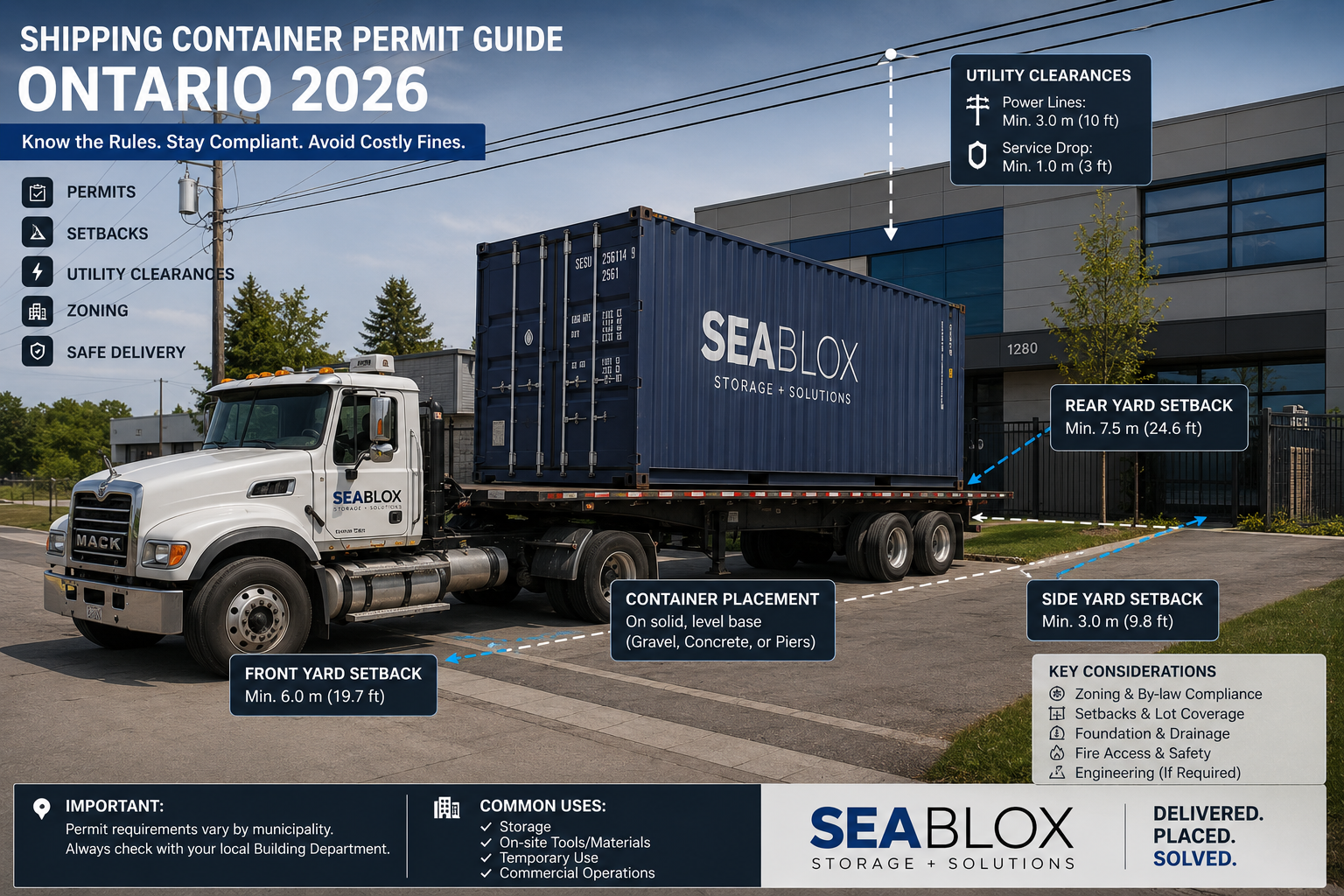
Shipping containers are becoming increasingly popular across Ontario for storage, construction sites, workshops, offices, retail spaces, industrial storage, and custom modifications. However, one of the most common questions customers ask before delivery is:
Do you need a shipping container permit Ontario?
The answer depends on several factors:
- Where the container will be placed
- Whether it is temporary or permanent
- Residential or commercial use
- Whether utilities are installed
- Municipal zoning bylaws
- Foundation type
- Size and quantity of containers
Every municipality in Ontario has slightly different rules. Some cities allow temporary containers under certain conditions, while others regulate them more strictly through zoning bylaws or building permit requirements.
At Seablox, we regularly help customers across Ontario understand shipping container placement requirements, delivery constraints, and site preparation considerations before containers arrive.
When Is a Shipping Container Permit Required in Ontario?
In many Ontario municipalities, a shipping container may require:
- A building permit
- Zoning approval
- Site plan approval
- Temporary use permit
- Electrical permit (ESA)
- Minor variance approval
A permit is more likely to be required when:
- The container is placed permanently
- The container is modified
- Electrical or plumbing is installed
- The container is used for occupancy
- Multiple containers are stacked
- The container is used commercially
- The container exceeds accessory structure limitations
Temporary containers on active construction sites may sometimes be exempt or subject to simplified approvals, but this varies significantly between municipalities.
Residential vs Commercial Shipping Container Rules
Residential shipping container rules are usually more restrictive than commercial or industrial zoning.
Understanding the requirements for a shipping container permit Ontario is essential for compliance and to avoid potential fines.
Understanding the regulations around a shipping container permit Ontario is crucial for compliance.
Residential Properties
On residential properties, municipalities may regulate:
- Maximum accessory structure size
- Height restrictions
- Setbacks from property lines
- Appearance requirements
- Number of accessory structures
- Temporary placement duration
Some municipalities prohibit shipping containers entirely in residential front yards or visible areas.
Customers often use containers for:
- Home renovation storage
- Seasonal storage
- Workshops
- Hobby spaces
- Backyard offices
Before ordering a container for residential use, it is important to confirm local bylaws.
Commercial and Industrial Properties
Commercial and industrial properties are generally more flexible for shipping container placement.
Containers are commonly used for:
- Equipment storage
- Construction staging
- Inventory overflow
- Shipping and logistics
- Workshops
- Modified offices
- Generator enclosures
- Chemical storage
- Refrigeration and freezer applications
However, municipalities may still regulate:
- Placement locations
- Fire routes
- Parking impacts
- Screening requirements
- Maximum container quantity
- Landscaping buffers
- Temporary vs permanent use
Industrial zones often allow shipping containers more easily than commercial retail zones.
Temporary vs Permanent Shipping Containers
A major factor in permit requirements is whether the container is considered temporary or permanent.
Temporary Shipping Containers
Temporary containers are commonly used for:
- Construction projects
- Renovations
- Seasonal storage
- Temporary inventory overflow
Municipalities may allow temporary placement for a limited duration such as:
- 30 days
- 60 days
- 90 days
- Length of active building permit
Some municipalities require renewal after the temporary period expires.
Permanent Shipping Containers
A permanently installed container is more likely to trigger:
- Building permit requirements
- Foundation requirements
- Zoning review
- Engineering requirements
- Site plan review
Permanent installations are especially regulated when containers are modified into:
- Offices
- Retail spaces
- Workshops
- Washrooms
- Occupied structures
- Multi-container assemblies
Shipping Container Foundations Explained
Many municipalities care about how the container is supported.
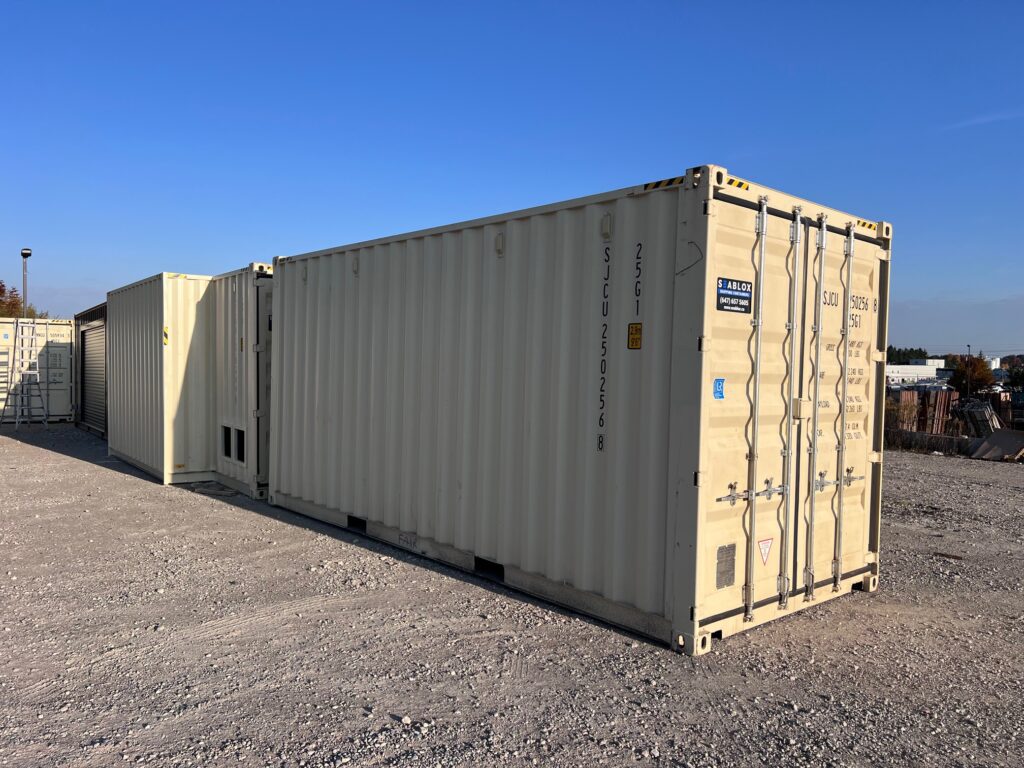
Common foundation types include:
Gravel Pad
A properly compacted gravel pad is one of the most common and cost-effective options for storage containers.
Benefits include:
- Lower cost
- Drainage improvement
- Easier installation
- Good support for standard storage use
However, poorly prepared gravel can cause:
- Container twisting
- Door alignment issues
- Settlement problems
- Water pooling
Concrete Pad
Concrete pads are common for:
- Permanent installations
- High traffic applications
- Modified containers
- Heavy industrial use
- Containers with frequent forklift traffic
Concrete provides excellent long-term stability.
Concrete Piers or Sonotubes
Some customers use:
- Sonotube piers
- Helical piles
- Concrete blocks
- Structural steel supports
These systems may reduce site disturbance and improve drainage.
Foundation requirements vary by municipality and intended use. Check out our in depth article about container foundation options here.
Do Modified Shipping Containers Need Permits?
In many cases, yes.
Modified containers often require additional approvals because they may include:
- Electrical systems
- Plumbing
- HVAC systems
- Spray foam insulation
- Structural modifications
- Windows and doors
- Occupancy use
Examples include:
- Shipping container offices
- Washroom containers
- Retail containers
- Lunchrooms
- Equipment enclosures
- Freezer and cooler containers
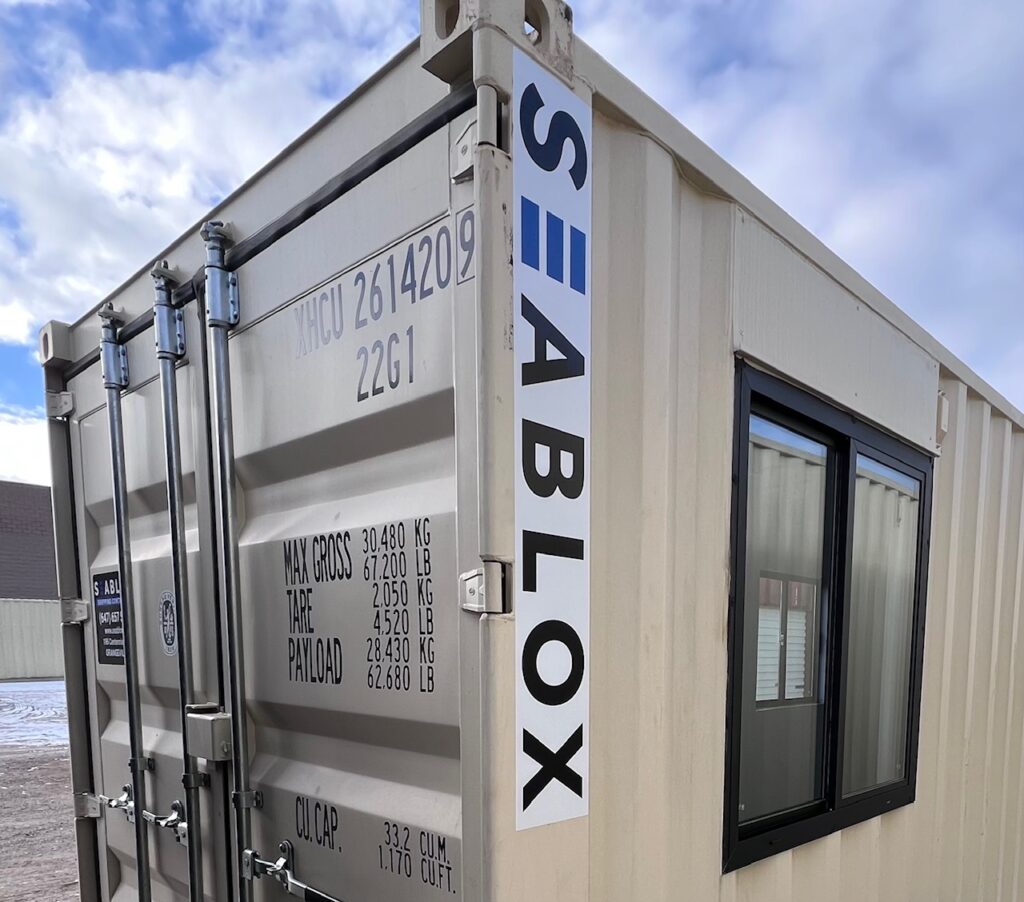
Electrical work in Ontario generally requires inspection through the Electrical Safety Authority (ESA).
Delivery Access Requirements
One of the most overlooked aspects of shipping container projects is delivery access.
Even if zoning approvals are obtained, the container still needs enough clearance for safe delivery.
Typical delivery considerations include:
- Overhead wires
- Tree branches
- Fence locations
- Soft ground conditions
- Slope and grade
- Driveway width
- Turning radius
- Crane access
- Tilt deck clearance
For example, a standard 20-foot container delivered by tilt-and-load truck often requires approximately:
- Around 60 feet of straight clearance during offloading
- Sufficient vertical clearance during tilt-up
Dense urban areas such as Toronto, Mississauga, Vaughan, and Hamilton may require crane delivery due to:
- Narrow lots
- Limited access
- Tight laneways
- Overhead obstructions
- Underground utilities
Common Municipal Restrictions
Ontario municipalities may regulate shipping containers through:
- Zoning bylaws
- Property standards bylaws
- Site plan control
- Building code requirements
- Fire code requirements
Common restrictions include:
- Maximum container quantity
- Screening requirements
- No containers in front yards
- Height limitations
- Time limits for temporary containers
- Restrictions in residential areas
- Architectural appearance requirements
Some municipalities treat shipping containers similarly to accessory buildings, while others classify them separately.
Can You Live in a Shipping Container in Ontario?
Living in a shipping container in Ontario is much more complicated than using one for storage.
Container homes typically require:
- Full building permits
- Engineered drawings
- Structural approvals
- HVAC compliance
- Energy code compliance
- Plumbing permits
- Septic approvals where applicable
- ESA inspections
Municipal zoning also determines whether residential occupancy is permitted on the property.
Fire Code and Safety Considerations
Commercial and industrial container installations may also require consideration for:
- Fire department access
- Egress requirements
- Fire separation distances
- Emergency exits
- Hazardous material storage requirements
- Ventilation systems
Modified containers used for:
- Battery storage
- Chemical storage
- Generator enclosures
- Fuel storage
may require additional engineering and safety review.
How Seablox Helps Customers Prepare
At Seablox, we work with customers across Ontario on:
- Shipping container delivery planning
- Site access reviews
- Foundation recommendations
- Modified container projects
- Commercial and industrial container applications
- Temporary and permanent installations
We always recommend customers verify local requirements directly with their municipality before installation.
Our team can also help customers understand practical considerations such as:
- Delivery access
- Crane requirements
- Site grading
- Container sizing
- Modification planning
- Utility routing
- Placement logistics
Shipping Container Permit FAQs
Do I need a permit for a storage container in Ontario?
Sometimes. Temporary storage containers may be permitted without a full building permit in some municipalities, while permanent or modified containers often require approvals.
Can I put a shipping container in my backyard?
Some municipalities allow backyard shipping containers, while others restrict them through zoning bylaws or accessory structure rules.
Are shipping container offices legal in Ontario?
Yes, but modified office containers usually require building, electrical, and sometimes zoning approvals.
Can I use a shipping container for commercial storage?
Commercial and industrial properties commonly use shipping containers for storage, but local zoning rules still apply.
What is the best base for a shipping container?
Compacted gravel is common for standard storage applications, while concrete pads are preferred for permanent or high-traffic uses.
Do shipping containers need foundations?
Many storage containers can sit on gravel or piers, but modified or permanent installations may require engineered foundations.
Final Thoughts
Shipping containers are extremely versatile, but permit and zoning requirements vary significantly across Ontario municipalities.
Before purchasing or renting a container, it is important to:
- Confirm zoning requirements
- Review municipal bylaws
- Verify delivery access
- Understand foundation needs
- Plan for utility requirements if modified
Whether you need a simple storage container or a fully modified commercial unit, proper planning helps avoid costly delays and site issues.
Seablox provides shipping containers, container modifications, and delivery services throughout Ontario for commercial, industrial, and residential applications.